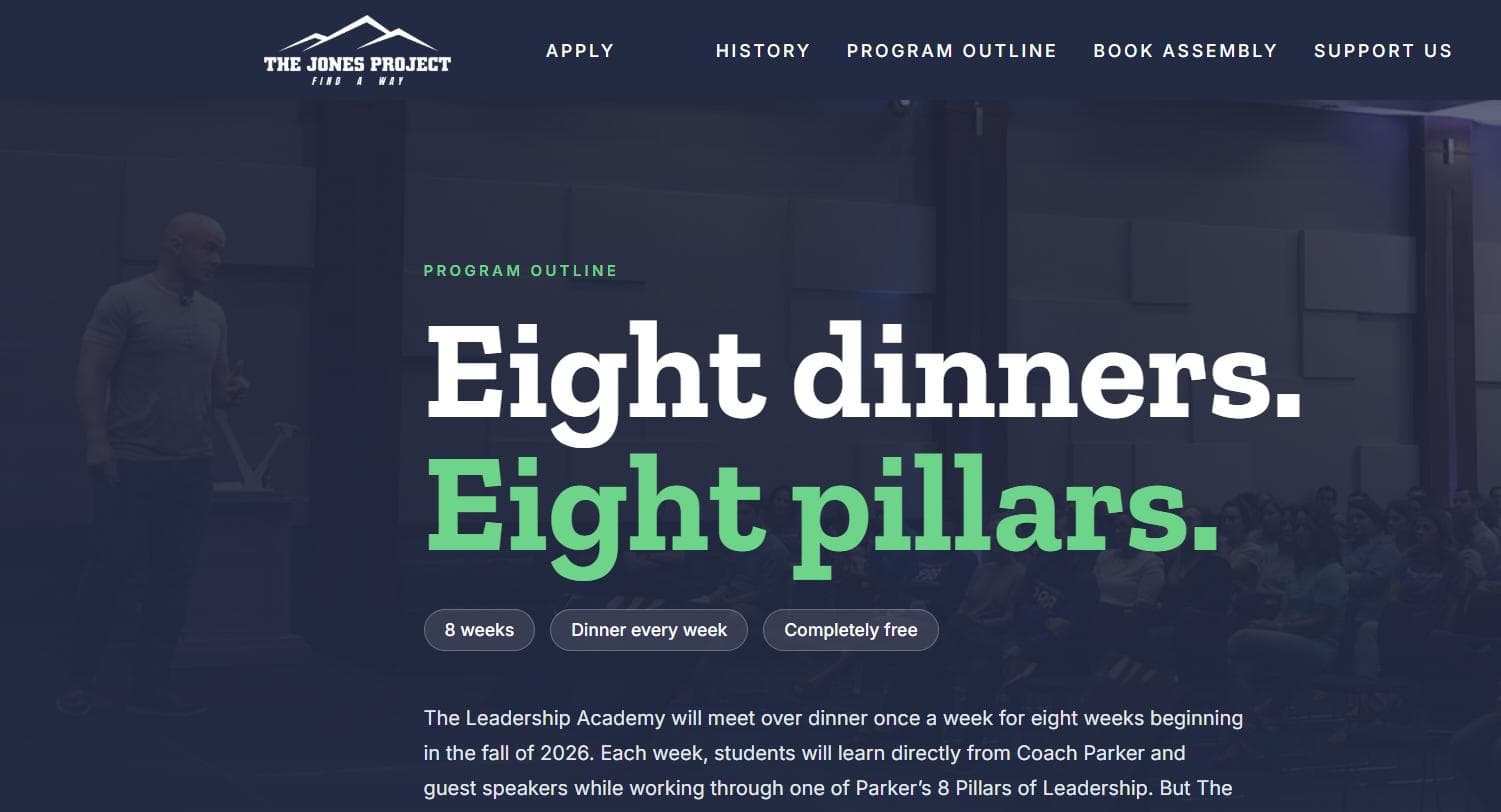

The Jones Project · 2026 · Teen mental-health nonprofit
I’m Jaden Flanery. I build custom software for people whose work doesn’t fit anything you can buy — a nonprofit’s application system, a hundred students matched to fifty mentors in one evening, federal filings turned into a queue somebody can actually work.
Three sectors, three different problems, one person who built all of them. Every screenshot below is the running system, not a mockup of one.
The Jones Project · 2026 · Teen mental-health nonprofit
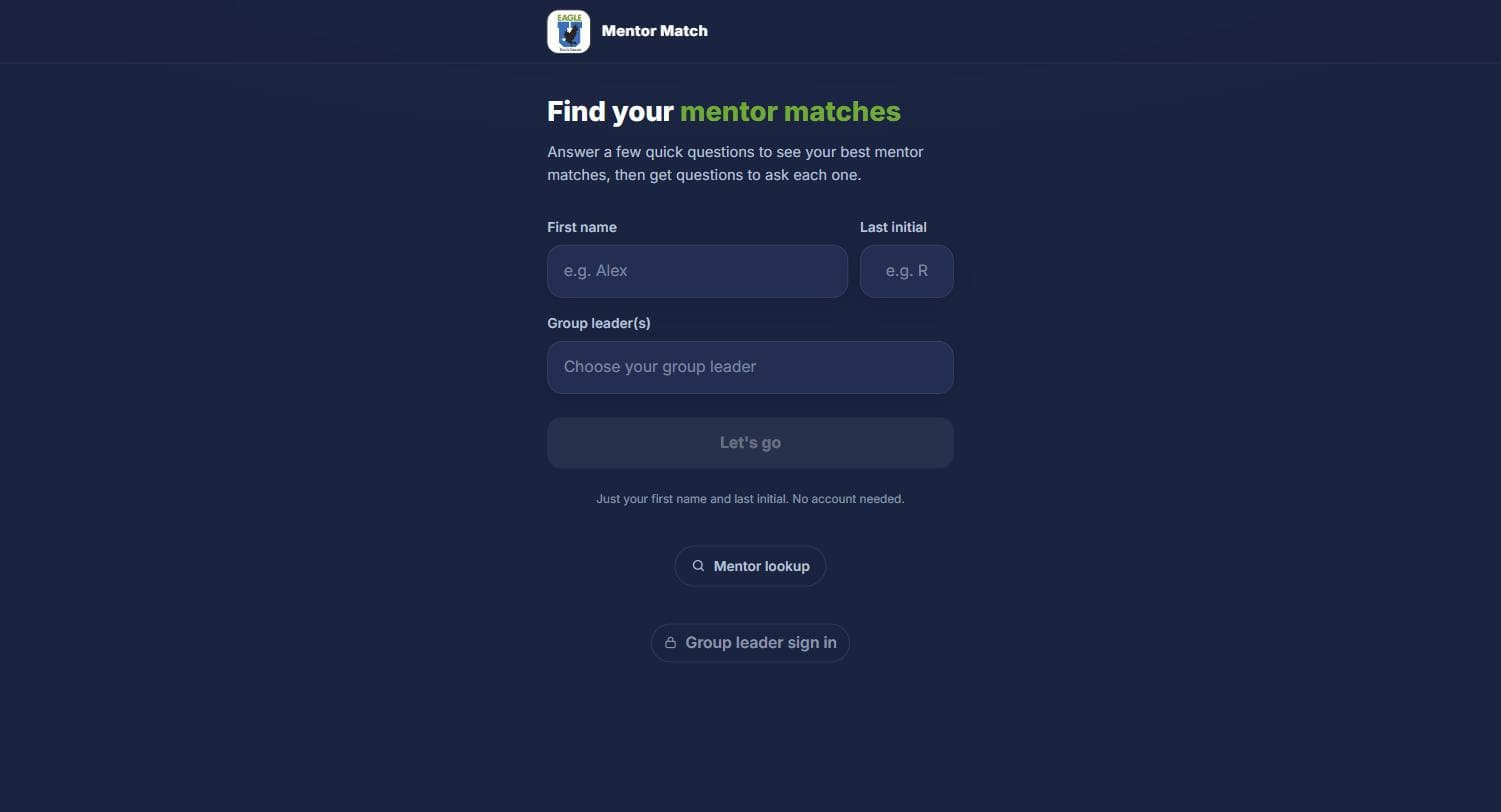
Eagle U · 2026 · Youth leadership program
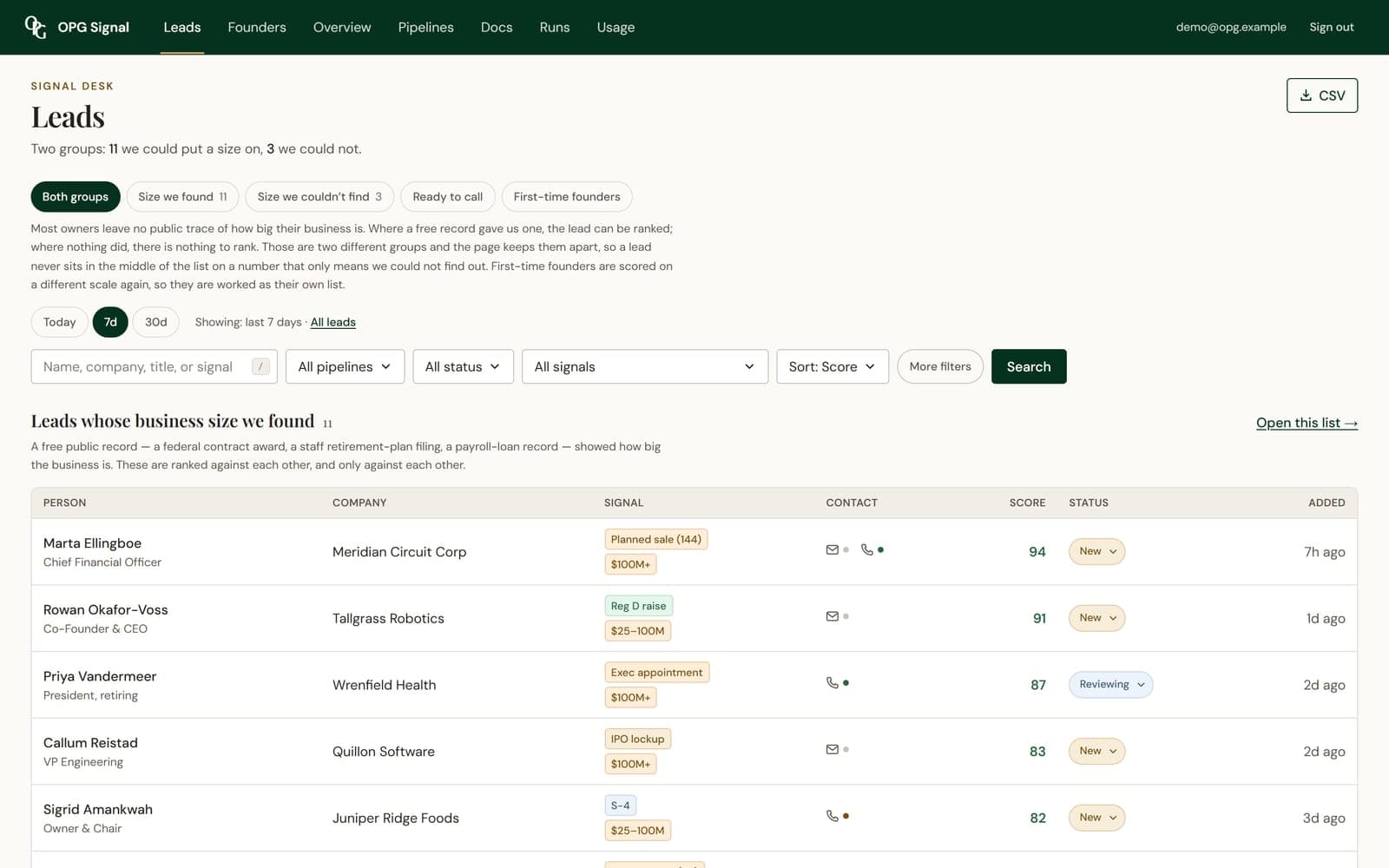
Opulence Planning Group · 2026 · Financial advisory
The system a business needs when nothing you can buy quite fits. Applications, client portals, admin consoles, internal tools — built for one organization, which is yours.
You get: A deployed application, hosted and running, with an admin area your staff use without calling me.
Four to sixteen weeks, depending on scope
Work spread across tools that don’t talk to each other. I replace them with one system, or connect the ones worth keeping so they stop disagreeing about the same facts.
You get: One system your team logs into, and a written record of what each old tool was doing before it went away.
Six to twelve weeks
Getting records out of wherever they live now and into something you can query, with a reconciliation that proves every row arrived. Also the pipelines that keep them current.
You get: Your history in a real database, a reconciliation you can check line by line, and the old source kept as a read-only archive.
Two to eight weeks
Every line below points at something already shipped and still running. If I can’t point at it, it isn’t on the list.
Full systems, not pages. Accounts and permissions, admin consoles, records, file and video handling, transactional email.
A nonprofit’s application intake, student portal and staff admin
The software a business needs but nobody sells: review queues, dispatch boards, status trackers, the thing currently held together by one person and their memory.
A live matching tool that ran an evening for 150 people
Pulling records from public sources and vendor APIs, resolving the same entity across them, and grading how confident the result is field by field.
Federal filings turned into a deduplicated, scored queue
Moving records out of whatever they’re stuck in and into something you can actually query, with a reconciliation that proves every row arrived and nothing changed on the way.
A nonprofit whose applicant history lived in workbooks
Domains, DNS, email, hosting, backups — the boring half that decides whether a system is still working a year from now.
Every system listed here is deployed and in use
Nobody paid for these. They’re here because they’re the part of the range you can go and check yourself, without asking anyone’s permission first.
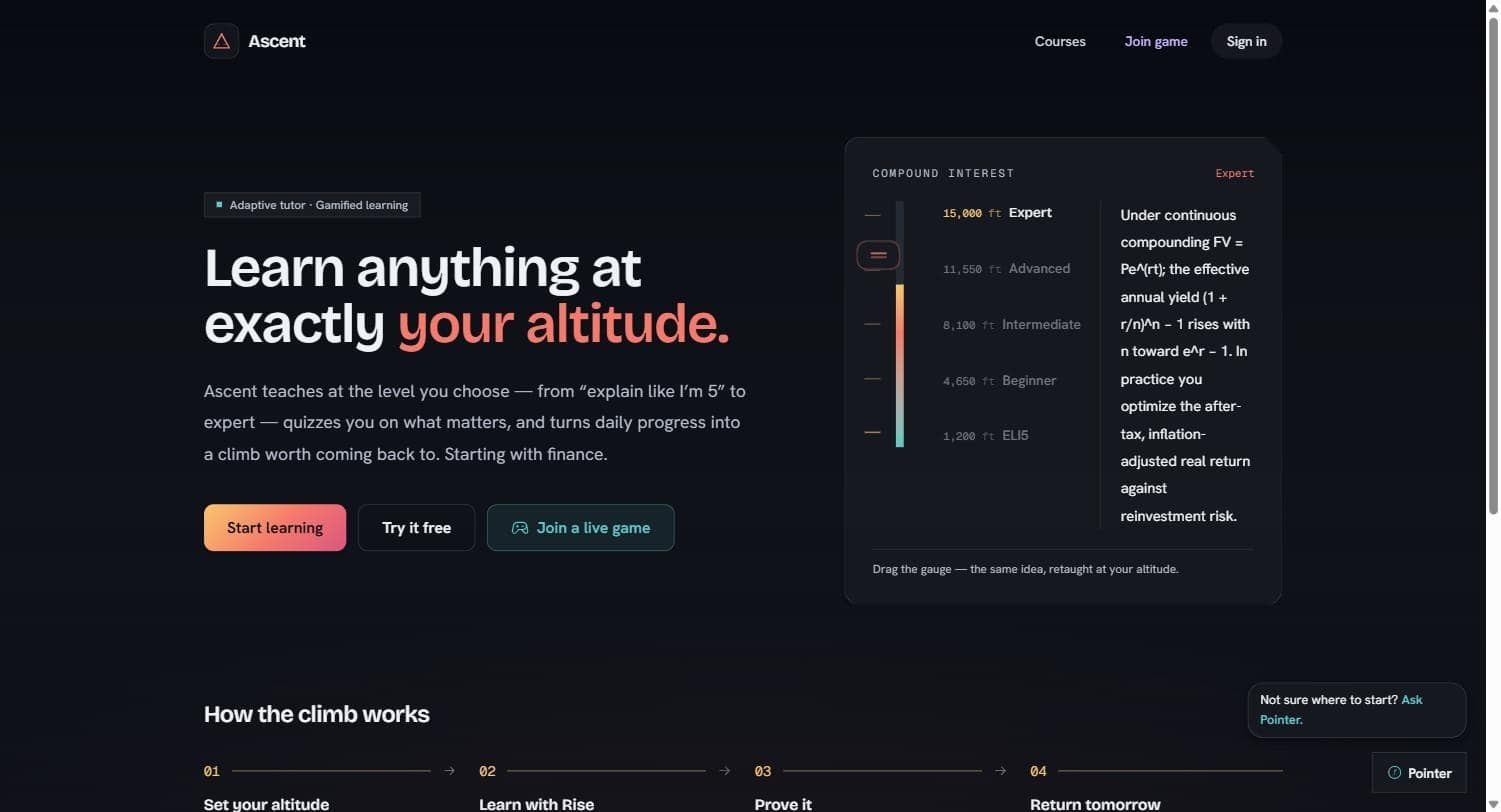
An adaptive learning platform built around a single control: drag the altitude slider from “explain like I’m five” up to expert, and the same concept is retaught at that level.
After every answer it suggests the next question worth asking — the part a beginner cannot supply for themselves.
Next.js · TypeScript · Supabase
Open it (opens in a new tab)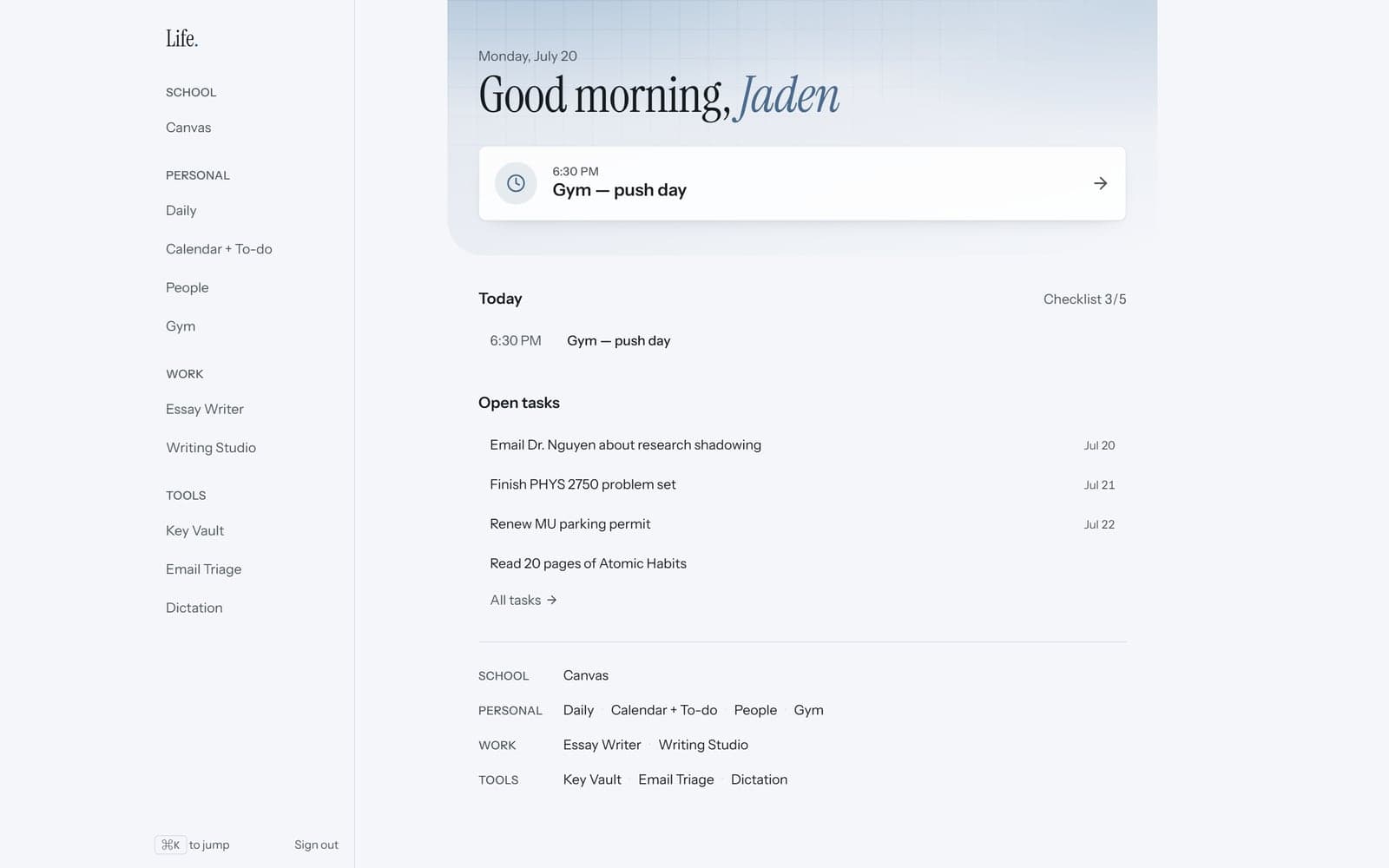
A personal operations app that opens as a briefing rather than a menu — the next thing on the calendar, the checklist, and what actually matters, assembled before you ask.
Every feature is a self-contained module behind a config flag, so someone else can switch off the parts they don’t want.
Next.js · Supabase · PWA
Private — it runs my own calendar, notes and finances, so it is shown rather than opened.
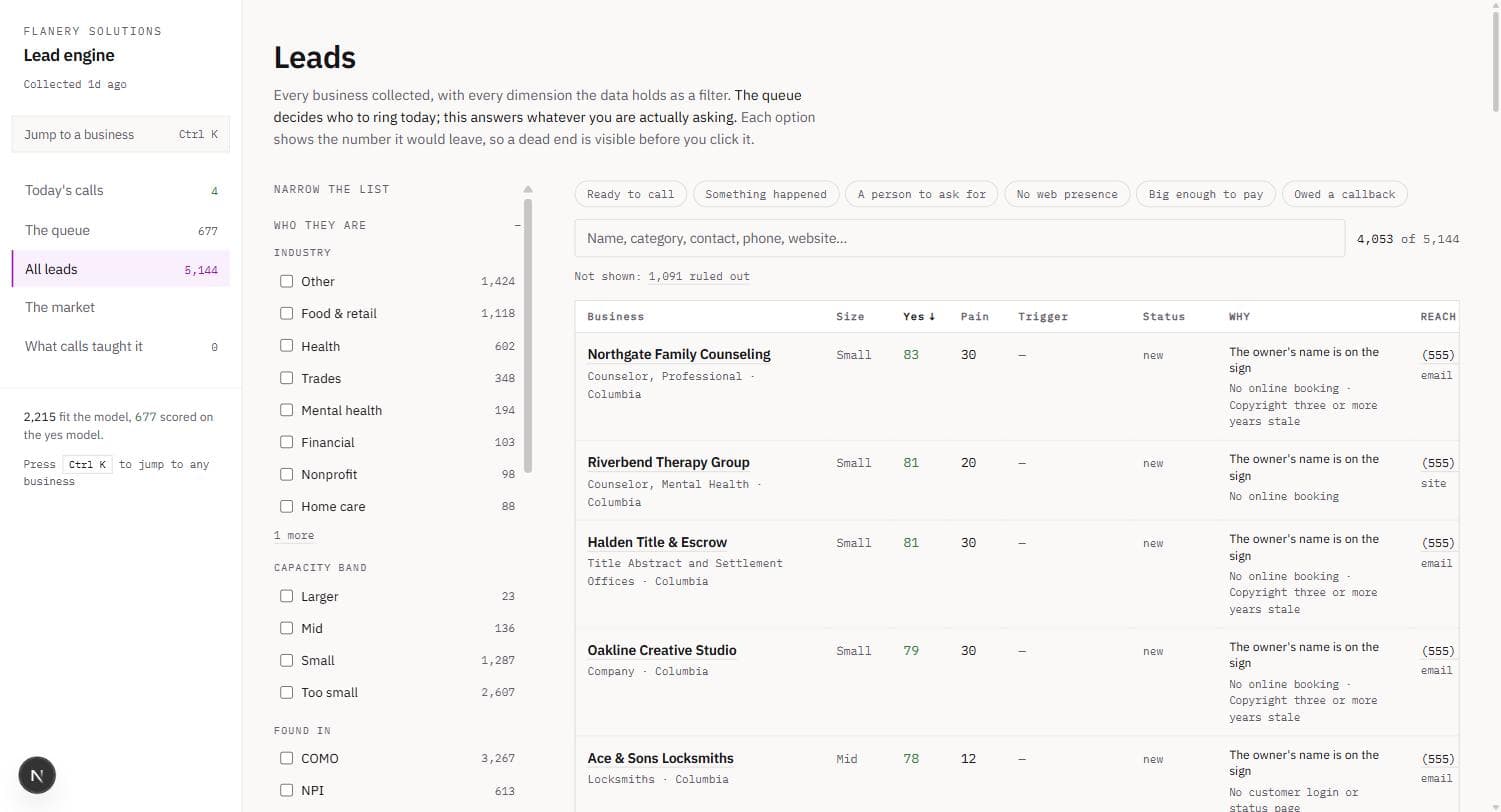
An internal prospecting tool. It collects public records on local businesses, scores them against a model of who is actually worth a call, and hands back a queue where every row carries the reason it is there.
Nothing in it contacts anybody. It assembles and ranks; the call is a decision a person makes, and there’s deliberately no send button to make that easy.
Next.js · TypeScript · Postgres · Supabase
Private — it holds real records on real local businesses, so it is admin-gated and shown rather than opened. Every business name in the screenshot is fabricated and every number is masked.
Four stages, and you can leave after any of them. The map at stage two is yours whether or not I build anything.
Half an hour. You tell me what you’re running on now, I tell you whether I can help. Sometimes the answer is no, and that’s worth knowing early.
I write down every tool and process you depend on, and where each one costs you time. You keep that document either way.
You see working software every week. Nothing gets built for a month behind a curtain and then unveiled.
I deploy it, host it, and keep it running. You’re not handed a folder of code and wished luck.

I’m Jaden Flanery. I study Personal Financial Planning at the University of Missouri, so I spent two years on how businesses actually run — cash flow, records, what has to be documented and why — before I wrote software for one.
Since then I’ve shipped systems for three organizations and built several more for myself. All of them are still running.
Most people who can build a system have never had to reconcile one. I ask about your books before I ask about your stack.
Flanery Solutions is mine. You work with me directly — there’s no account manager, and nobody to hand you off to.
Tell me how the work runs now and I’ll reply with times, usually the same day. Half an hour, no obligation either way — and sometimes the answer is that I’m the wrong person for it, which is worth knowing early. Worst case, you walk away with a written map of your own systems.